Sunday, December 11, 2011


Comparison of integrating music into classes in Japan and America


Description:
The journal article, Attitudes and practices of Japanese and American music teacherstowards integrating music with other subjects, displays the studies of the comparison between Japan and American teachers’ attitudes and practices. A survey was completed by various teachers from each country. “Music teachers from the USA obtained higher attitude ratings towards the use of music integration, while music teachers in Japan integrated music with other subjects to a lesser extent.”

Evaluation:
This brief but to the point article gives a direct summary on the results and it would be beneficial to anyone fascinated in which country will use more music. Teachers may find this article interesting and may apply it to class by integrating more music.

APA:
 Zdzinski, S., Ogawa, M., Dell, C., Yap, C., Adderley, C., & Dingle, R. (2007). Attitudes and practices of japanese and american music teachers towards integrating music with other subjects. International Journal of Music Education, 25(1), 55-70.

The Spiritual Shakuhachi

Description:
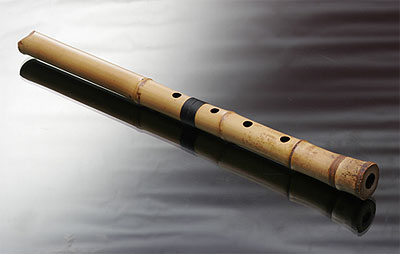
In the journal article, The Shakuhachi as Spiritual Tool: AJapanese Buddhist Instrument in the West, Jay Keiser talks about the Japanese traditional instrument; the Shakuhachi. It refers to how the instrument has been known for its classical sound and how it has adapted to western tonology. Many players say the Shakuhachi is “an instrument on Buddhist philosophy and meditation practice, which is connected to its historical background as a spiritual tool by the Fuke sect of Buddhist monks in Japan.” The spiritual Shakuhachi continues to be played today.
Evaluation:
This article presents numerous details on what the instrument symbolizes. It may be interesting for someone who enjoys classical music or plays the instrument.
APA:
Keister, J. (2004). The shakuhachi as spiritual tool: A japanese buddhist instrument in the west. Asian Music, &v(2), 99.

Japanese Traditional Music development in University of Cologne, West Germany

Description:
The journal article, Report on the Third German-JapaneseSymposium on traditional Japanese music in Cologne (1981), written by Ingrid Fritsch presents a vast amount of info on the growth of traditional Japanese music in Cologne. The ethnomusicology section of Cologne has advanced into a research center for East Asian and especially Japanese music holding a great amount of resources. Translations of historical music material were created as well as Japanese music being more available. Fritsch outlines the three symposiums that were held from 1978 through 1981 and how it has affected the appearance of traditional Japanese music. “In order to deepen contacts with foreign scholars, German-Japanese symposia on traditional Japanese music have regularly taken place.” These meetings have been supported by several organizations of Japan and Germany (Fritsch 144).

Evaluation:
This article may be motivating for any Japanese music artists because their music is spreading. Also, this may be a good article for someone who has attended or attends the University of Cologne because they might find that traditional Japanese music sparks their interest.

APA:
Fritsch, I. (1981). Report on the third german-japanese symposium on traditional japanese music in cologne (1981). Asian Music, 13(1), 144-146.


‘Culture schools’ and music education in Japan
Description:
In the journal article, Music education at ’Culture Schools, Tadahiro Murao presents information on Culture Schools and music education in Japan. Culture Schools are very popular in Japan and students who attend these schools can be kids, adults, and even people who have retired. “Accordingly, culture schools can be regarded as a one of the life-long educational systems.”  Japanese traditional music classes are way more popular than western classes and most Culture Schools offer numerous classes on the Japanese traditional music styles. This article further refers to education teaching styles.
Evaluation:
The information Tadahiro Murao displays is legitimate considering he is a member of the Faculty at the Aichi University of Education in Japan. This journal article may be for someone interested in attending a Culture School, or someone who might compare this type of schooling to others. Considering that it offers material on systems in which traditional Japanese is taught currently as well as prior years, this article may be informative to any music teacher.
APA:
Tadahiro M. (2000). Music education at 'culture schools'.International Journal of Music Education, 35(1), 15-16.

Saturday, December 10, 2011


The Shakuhachi: one of Japans traditional instruments

Description:
This website gives a brief overview of the basic structure of the instrument, how it has become a traditional sound to the Japanese culture, and details as to why it sounds so beautiful. “This instrument produces a sound that is said to replicate the full range of natural life on earth.” Depending on how the Shakuhachi is played, many can relate it to the way nature sounds. The beautiful tone projected through the instrument reminds people of the spiritual tradition of Japan.

Evaluation:
A knowledgeable synopsis is given highlighting many important characteristics of the Shukuhachi. Checking out this site will benefit anyone who is fascinated in the instrument or Japans musical tradition. This website also shows interesting points on the design of the flute which may be informational to those who play a currently designed flute.

MLA:
"Shakuhachi - The Sound of Nature." Shakuhachi-Traditional Japanese Bamboo Flutes. Traditional Musical Instruments of Japan Used for Zen Buddhist Meditation, Classical, Jazz & Folk Music. Web. 10 Dec. 2011.

Sapporo Symphony Orchestra

Description:
This website provides a thorough biography of the SapporoSymphony Orchestra and how they have grown over the past 50 years. They present 120 splendid performances each year throughout the 5.5 million residents of Hokkaido. “In recent years, the Sapporo Symphony Orchestra has been gaining further popularity as the orchestra which presents the vast land of Hokkaido with a clear sound and a dynamic and powerful expression.” Their popularity has tremendously grown and continues to increase especially because of the great outcome of the Europe tour in May of 2011. This website also displays the former conductors who have contributed to the orchestra’s success.

Evaluation:
This website contains vital information on the development of the Sapporo Symphony Orchestra. It would be a great website for anyone interested in attending a concert, purchasing a CD, or to simply learn about the orchestra and its impact on Japanese music. This website lacks to present any upcoming concerts.

MLA:
"The Sapporo Symphony Orchestra The Orchestra." 札幌交響楽団 Sapporo Symphony Orchestra-「札響」. June 2011. Web. 10 Dec. 2011.

Friday, December 9, 2011


Ayumi Hamasaki

Description:
This website takes us through the life of Ayumi Hamasaki. In detail, it covers all aspects of her childhood, to her career and to how it has affected the Japanese Music industry all together. Ayumi Hamasaki has done several things to change the way music will be viewed forever. Her consistent change of appearance had much to do with the rise of her popularity and her trends have spread throughout Japan. She has a number of top selling records and is viewed as one of the most popular music artists today.

Evaluation:
This website displays a ton of information on Ayumi Hamasaki and if you are looking to know more about her this is a great site to find material. “Hamasaki has been dubbed the "Empress of Pop" because of her popularity and widespread influence in Japan.” This website may also be for anyone who enjoys the pop music style considering she is well known in that genre.

MLA:
"Ayumi Hamasaki." Wikipedia, the Free Encyclopedia. 2 Dec. 2011. Web. 09 Dec. 2011.